 NeuroGenesys
Watch alongside the reading.
60 hand-picked lectures and explainers, plus 18full courses and series, to complement the courses and the lab's own research. Each opens on its own page with the player embedded. They are a way in, not a source: where a video and a lesson disagree, the lesson cites its evidence.
NeuroGenesys research
Continual learning, forgetting & plasticity
Background for our class-incremental results: what catastrophic forgetting is, the standard remedies, and why networks lose the ability to learn at all.
- Catastrophic forgetting in class-incremental learning is a verifier-exploitability problem
- Escaping the saturated game: plasticity, harder benchmarks, and retrieval in continual learning
 1:16:40Institute of Data Science (IDS), NUS
Unifying Continual Learning and OOD Detection by Liu Bing
Bing Liu, senior author of Kim et al. (NeurIPS 2022), on why class-IL splits into within-task prediction × task-id prediction. This is the theorem our decomposition rests on.
Watch 42:07Paul Hand
Continual Learning and Catastrophic Forgetting
A lecture on the classic remedies: EWC, LwF, progressive nets and generative replay.
Watch 1:39:31ContinualAI
[Continual Learning Course] Lecture #2: Understanding Catastrophic Forgetting
Covers task-, domain- and class-incremental settings and why class-IL is the hard one.
Watch 1:11:21Conference on Lifelong Learning Agents (CoLLAs)
Maintaining Plasticity in Deep Continual Learning - Rich Sutton - CoLLAs 2022
Loss of plasticity and continual backprop, from the source.
Watch 1:01:29Conference on Lifelong Learning Agents (CoLLAs)
Why do neural networks lose plasticity? - Clare Lyle - CoLLAs 2023
Mechanisms of plasticity loss. Our runs pointed to the optimizer and weight norm.
Watch Series10 videosContinualAI
Continual Learning Course
The full ContinualAI course: scenarios, metrics, replay, regularization and architectures.
Open series
Selection, verifiers & exploitability
The theory under our ε work. It is classical comparative judgment and signal detection, applied to Best-of-N, reward models and routers, plus why an exploitable verifier caps what more sampling can buy.
- Thurstone bounds Best-of-N: a 1927 identity, calibrated for modern verifiers
- Exploitability is a property of a verifier and its candidate pool, not the verifier alone
- Correction: the ε selection law is Thurstone's 1927 comparative judgment, not a discovery
 6:32khanacademymedicine
Signal detection theory - part 1 | Processing the Environment | MCAT | Khan Academy
Hits, false alarms and overlapping distributions: where ε's functional form comes from.
Watch 29:52Devin Burns
Signal Detection Theory
A fuller treatment of d′ and ROC curves.
Watch 51:57Anthropic
What is AI "reward hacking"—and why do we worry about it?
Exploitability in production RL, from people who work on it.
Watch 47:56Sasha Rush
Speculations on Test-Time Scaling (o1)
Where verifiers sit in test-time scaling, including Best-of-N and search.
Watch
Memory, retrieval & learning on the job
External memory, test-time learning and the frontier debate over continual learning. Our results find that retrieval obeys the same selection law as routing, and that retriever ε rises as memory diversifies.
- Escaping the saturated game: plasticity, harder benchmarks, and retrieval in continual learning
- The capacity audit: most class-incremental routing error is placement slack, not capacity
 6:36IBM Technology
What is Retrieval-Augmented Generation (RAG)?
The basic pattern: retrieve, then generate.
Watch 32:31Yannic Kilcher
Titans: Learning to Memorize at Test Time (Paper Analysis)
A walkthrough of Google's neural long-term memory that learns at inference.
Watch 2:59:44Cognitive Revolution "How AI Changes Everything"
Nested Learning: Ali Behrouz on the Quest for Continual Learning & Illusion of AI Architectures
The Titans / Nested Learning author on architecture-level continual learning.
Watch 2:26:08Dwarkesh Patel
Andrej Karpathy — “We’re summoning ghosts, not building animals”
Why today's agents don't yet learn on the job, and what's missing.
Watch 1:36:04Dwarkesh Patel
Ilya Sutskever – We're moving from the age of scaling to the age of research
Continual learning as the next research bet, from SSI's founder.
Watch
Full courses & series
Complete university courses and multi-part series, for when one video isn't enough. Each also appears under the course it supports below.
- Series10 videosContinualAI
Continual Learning Course
The full ContinualAI course: scenarios, metrics, replay, regularization and architectures.
Open series  Series62 videosStatQuest with Josh Starmer
Statistics Fundamentals
Short, friendly episodes on distributions, p-values, likelihood and more.
Open series Series16 videos3Blue1Brown
Essence of linear algebra
The full visual series, from vectors to abstract vector spaces.
Open series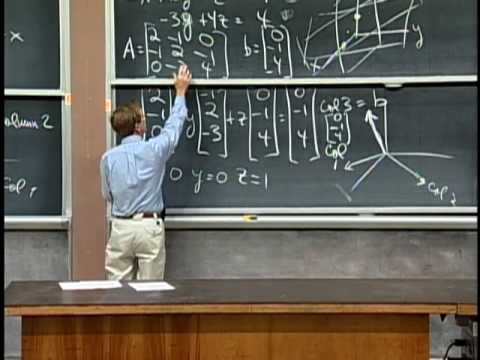 Series36 videosMIT OpenCourseWare
MIT 18.06 Linear Algebra, Spring 2005
Gilbert Strang's classic course, for the full university treatment.
Open series Series43 videosSteve Brunton
Singular Value Decomposition [Data-Driven Science and Engineering]
The SVD in depth: low-rank approximation, PCA and least squares.
Open series Series16 videosJakob Foerster
Information Theory, Pattern Recognition, and Neural Networks
David MacKay's Cambridge lectures, the companion to his free textbook.
Open series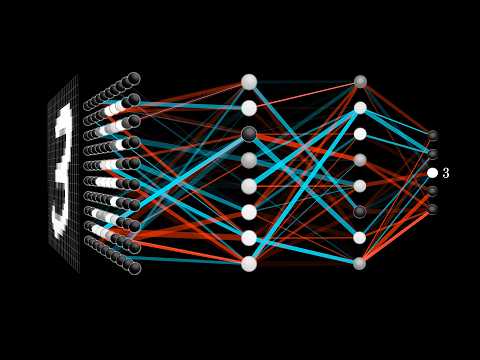 Series10 videos3Blue1Brown
Neural networks
The whole visual deep-learning series, from neurons to transformers.
Open series Series10 videosAndrej Karpathy
Neural Networks: Zero to Hero
Build everything from backprop to a GPT yourself, in code.
Open series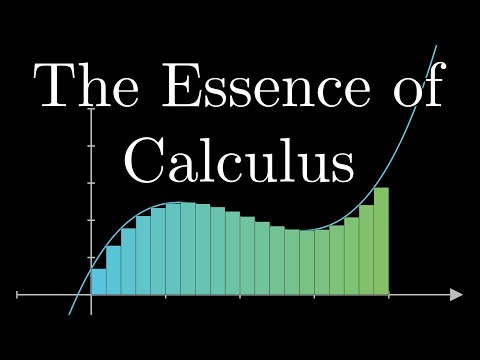 Series12 videos3Blue1Brown
Essence of calculus
Derivatives and the chain rule, visually: the calculus behind gradient descent.
Open series Series19 videosStanford Online
Stanford CS229: Machine Learning, Spring 2022
The standard university course on supervised learning and generalization.
Open series Series90 videosAlexander Amini
MIT 6.S191: Introduction to Deep Learning
MIT's yearly deep-learning bootcamp: the latest lectures first, then editions back to 2018.
Open series Series18 videosStanford Online
Stanford CS231N: Deep Learning for Computer Vision, 2025
Its lectures on backprop, optimizers and training dynamics are among the clearest anywhere.
Open series Series18 videosStanford Online
Stanford CS336: Language Modeling from Scratch, Spring 2026
Build and train a language model end to end: tokenizers, kernels, scaling, data.
Open series Series23 videosStanford Online
Stanford CS224N: Natural Language Processing with Deep Learning, Spring 2024
Christopher Manning's course: embeddings to transformers and LLMs.
Open series Series9 videosStanford Online
Stanford CME295: Transformers and Large Language Models, Autumn 2025
A compact, recent course focused only on transformers and LLMs.
Open series Series10 videosGoogle DeepMind
DeepMind x UCL | Introduction to Reinforcement Learning 2015
David Silver's course: the RL foundations that reasoning training builds on.
Open series Series21 videosNathan Lambert
The Post-Training Course (w/ Nathan Lambert's RLHF Book)
The full post-training course: RLHF, reward models, policy gradients, RLVR.
Open series Series46 videosMIT HAN Lab
EfficientML.ai Course, 2023 Fall (MIT 6.5940)
Song Han's course on pruning, quantization, distillation and efficient LLM serving.
Open series
Perspectives from the field
Long-form talks and interviews with researchers who shaped the field. They are opinions, often conflicting, and are best watched as a debate, not as settled fact.
 36:54University of Oxford
Prof. Geoffrey Hinton - "Will digital intelligence replace biological intelligence?" Romanes Lecture
Hinton on why digital learners share knowledge so much faster than brains, and the risks that follow.
Watch 2:22:20Dwarkesh Patel
Dario Amodei — “We are near the end of the exponential”
Anthropic's CEO on scaling, RL generalization and on-the-job learning.
Watch- 2:26:08Dwarkesh Patel
Andrej Karpathy — “We’re summoning ghosts, not building animals”
A sceptical timeline: what agents lack, including continual learning.
Watch - 1:36:04Dwarkesh Patel
Ilya Sutskever – We're moving from the age of scaling to the age of research
Why generalization, not scale, is now the bottleneck.
Watch  1:07:09Dwarkesh Patel
Richard Sutton – Father of RL thinks LLMs are a dead end
The case for agents that learn from experience rather than imitation.
Watch 39:32Y Combinator
Andrej Karpathy: Software Is Changing (Again)
LLMs as a new kind of computer, and what building on them is like.
Watch
Foundations
Probability & Inference
Read the course 15:113Blue1Brown
Bayes theorem, the geometry of changing beliefs
The base-rate trap drawn as areas. Watch alongside the Bayes' rule lesson.
Watch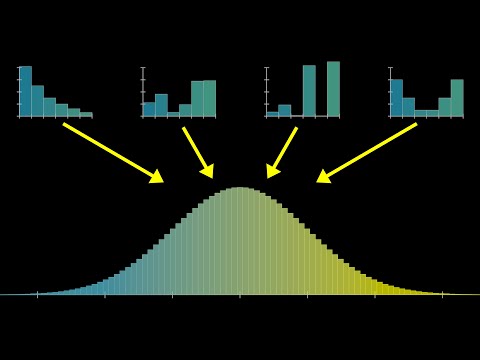 31:153Blue1Brown
But what is the Central Limit Theorem?
Why averages concentrate and why the bell curve keeps appearing.
Watch 6:12StatQuest with Josh Starmer
Maximum Likelihood, clearly explained!!!
A short, concrete picture of fitting a distribution by maximum likelihood.
Watch- Series62 videosStatQuest with Josh Starmer
Statistics Fundamentals
Short, friendly episodes on distributions, p-values, likelihood and more.
Open series
The Geometry of Learning
Read the course- 9:523Blue1Brown
Vectors | Chapter 1, Essence of linear algebra
Start of the classic visual series. The whole playlist is worth it.
Watch  10:593Blue1Brown
Linear transformations and matrices | Chapter 3, Essence of linear algebra
Matrices as maps: the mental model behind every neural-network layer.
Watch 17:163Blue1Brown
Eigenvectors and eigenvalues | Chapter 14, Essence of linear algebra
The directions a map only stretches, and why they matter.
Watch 6:44Steve Brunton
Singular Value Decomposition (SVD): Overview
Opens a full lecture series on the SVD and its data-science uses.
Watch- Series16 videos3Blue1Brown
Essence of linear algebra
The full visual series, from vectors to abstract vector spaces.
Open series - Series36 videosMIT OpenCourseWare
MIT 18.06 Linear Algebra, Spring 2005
Gilbert Strang's classic course, for the full university treatment.
Open series - Series43 videosSteve Brunton
Singular Value Decomposition [Data-Driven Science and Engineering]
The SVD in depth: low-rank approximation, PCA and least squares.
Open series
Information Theory
Read the course 32:203Blue1Brown
Reinventing Entropy | Compression is Intelligence Part 1
Derives entropy from scratch, framed around prediction and compression.
Watch 33:513Blue1Brown
But what is cross-entropy? | Compression is Intelligence Part 2
The loss every language model minimizes, and its link to compression.
Watch 5:13Adian Liusie
Intuitively Understanding the KL Divergence
A five-minute intuition for KL as the gap between cross-entropy and entropy.
Watch 30:383Blue1Brown
Solving Wordle using information theory
Entropy as expected information gain, applied to a game.
Watch- Series16 videosJakob Foerster
Information Theory, Pattern Recognition, and Neural Networks
David MacKay's Cambridge lectures, the companion to his free textbook.
Open series
Optimization & Generalization
Read the course 20:333Blue1Brown
Gradient descent, how neural networks learn | Deep Learning Chapter 2
Loss surfaces and descent, visually.
Watch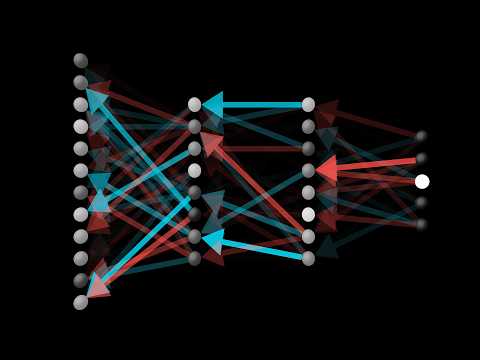 12:473Blue1Brown
Backpropagation, intuitively | Deep Learning Chapter 3
What backprop computes, before the calculus.
Watch- 2:25:52Andrej Karpathy
The spelled-out intro to neural networks and backpropagation: building micrograd
Build autograd yourself. The chain rule, organised, in code.
Watch  15:52DeepBean
Optimization for Deep Learning (Momentum, RMSprop, AdaGrad, Adam)
How SGD grew into Adam, one fix at a time.
Watch 34:06Welch Labs
What the Books Get Wrong about AI [Double Descent]
The overparameterization surprise from the generalization lesson.
Watch- Series10 videos3Blue1Brown
Neural networks
The whole visual deep-learning series, from neurons to transformers.
Open series - Series10 videosAndrej Karpathy
Neural Networks: Zero to Hero
Build everything from backprop to a GPT yourself, in code.
Open series - Series12 videos3Blue1Brown
Essence of calculus
Derivatives and the chain rule, visually: the calculus behind gradient descent.
Open series - Series19 videosStanford Online
Stanford CS229: Machine Learning, Spring 2022
The standard university course on supervised learning and generalization.
Open series - Series90 videosAlexander Amini
MIT 6.S191: Introduction to Deep Learning
MIT's yearly deep-learning bootcamp: the latest lectures first, then editions back to 2018.
Open series - Series18 videosStanford Online
Stanford CS231N: Deep Learning for Computer Vision, 2025
Its lectures on backprop, optimizers and training dynamics are among the clearest anywhere.
Open series
Frontier
Transformers & Language Models
Read the course 7:583Blue1Brown
Large Language Models explained briefly
An eight-minute overview to watch first.
Watch 27:143Blue1Brown
Transformers, the tech behind LLMs | Deep Learning Chapter 5
Next-token prediction, embeddings and the transformer, visually.
Watch 26:103Blue1Brown
Attention in transformers, step-by-step | Deep Learning Chapter 6
Queries, keys and values, step by step.
Watch 1:56:20Andrej Karpathy
Let's build GPT: from scratch, in code, spelled out.
Build a small GPT end to end. The best hands-on companion to this course.
Watch 1:17:57Stanford Online
Stanford CS336 Language Modeling from Scratch | Spring 2026 | Lecture 9: Scaling Laws
A university lecture on scaling laws and compute-optimal training.
Watch- Series18 videosStanford Online
Stanford CS336: Language Modeling from Scratch, Spring 2026
Build and train a language model end to end: tokenizers, kernels, scaling, data.
Open series - Series23 videosStanford Online
Stanford CS224N: Natural Language Processing with Deep Learning, Spring 2024
Christopher Manning's course: embeddings to transformers and LLMs.
Open series - Series9 videosStanford Online
Stanford CME295: Transformers and Large Language Models, Autumn 2025
A compact, recent course focused only on transformers and LLMs.
Open series
Reasoning Models & Reinforcement Learning
Read the course 46:10Nathan Lambert
Post-Training and RLHF Overview | Post-Training Book Course, Lecture 1
The author of The RLHF Book maps out post-training.
Watch 23:16Julia Turc
DeepSeek's GRPO (Group Relative Policy Optimization) | Reinforcement Learning for LLMs
The RL algorithm behind DeepSeek-R1-style reasoning training.
Watch 3:31:24Andrej Karpathy
Deep Dive into LLMs like ChatGPT
The full pipeline from pretraining to RL, for a general audience.
Watch- 1:07:09Dwarkesh Patel
Richard Sutton – Father of RL thinks LLMs are a dead end
A dissenting view: why RL's founder doubts imitation-trained LLMs.
Watch - Series10 videosGoogle DeepMind
DeepMind x UCL | Introduction to Reinforcement Learning 2015
David Silver's course: the RL foundations that reasoning training builds on.
Open series - Series21 videosNathan Lambert
The Post-Training Course (w/ Nathan Lambert's RLHF Book)
The full post-training course: RLHF, reward models, policy gradients, RLVR.
Open series
Test-Time Compute & Verification
Read the course- 47:56Sasha Rush
Speculations on Test-Time Scaling (o1)
A careful survey of how reasoning models might spend inference compute.
Watch  56:54Paul G. Allen School
Parables on the Power of Planning in AI: From Poker to Diplomacy: Noam Brown (OpenAI)
Why search and planning at inference beat bigger models in games.
Watch 1:37:12Sebastian Raschka
Build A Reasoning Model From Scratch 4: Inference Scaling 1 (Temperature, Top-p, Self-Consistency)
Sampling and majority vote in code, alongside the self-consistency lesson.
Watch- 51:57Anthropic
What is AI "reward hacking"—and why do we worry about it?
What happens when the verifier can be exploited.
Watch
Agents & Tool Use
Read the course 4:57IBM Technology
What is Tool Calling? Connecting LLMs to Your Data
The mechanics of function calling in five minutes.
Watch 15:09AI Engineer
How We Build Effective Agents: Barry Zhang, Anthropic
When to use an agent, and when a simple workflow is enough.
Watch 1:19:34AI Engineer
Stateful Agents — Full Workshop with Charles Packer of Letta and MemGPT
Agent memory from the MemGPT authors.
Watch 1:15:52AI Engineer
How METR measures Long Tasks and Experienced Open Source Dev Productivity - Joel Becker, METR
Time-horizon measurement and its pitfalls, from METR.
Watch
Interpretability & Alignment
Read the course 2:56Anthropic
Tracing the thoughts of a large language model
A three-minute look at circuit tracing.
Watch 22:433Blue1Brown
How might LLMs store facts | Deep Learning Chapter 7
MLPs as fact stores, and superposition, visually.
Watch 25:13International Association for Safe & Ethical AI
An Introduction to Mechanistic Interpretability – Neel Nanda | IASEAI 2025
A field overview from one of its leading researchers.
Watch 29:45FAR.AI
Buck Shlegeris - AI Control [Alignment Workshop]
Control: getting safe work out of models you don't fully trust.
Watch 40:59FAR.AI
Chris Olah - Looking Inside Neural Networks with Mechanistic Interpretability
The field's founder on features, circuits and why reverse-engineering is possible.
Watch 59:03Anthropic
Interpretability: Understanding how AI models think
Anthropic's interpretability team discusses what they have found inside Claude.
Watch
Efficient AI: Inference, Sparsity & Hardware
Read the course 1:22:52Stanford Online
Stanford CS336 Language Modeling from Scratch | Spring 2025 | Lecture 10: Inference
Where inference cost goes: memory bandwidth, batching, KV caches.
Watch 8:33Efficient NLP
The KV Cache: Memory Usage in Transformers
A short explanation of KV-cache memory.
Watch 19:44Maarten Grootendorst
A Visual Guide to Mixture of Experts (MoE) in LLMs
Routing, experts and load balancing, drawn out.
Watch 20:34Julia Turc
How LLMs survive in low precision | Quantization Fundamentals
Number formats and quantization from first principles.
Watch 21:42Veritasium
Future Computers Will Be Radically Different (Analog Computing)
The popular case for analog AI compute. Read it against our measured bounds.
Watch 32:21Dr Ben Miles
The Genius of Computing with Light
Background on photonic compute for the beyond-the-GPU lesson.
Watch- Series46 videosMIT HAN Lab
EfficientML.ai Course, 2023 Fall (MIT 6.5940)
Song Han's course on pruning, quantization, distillation and efficient LLM serving.
Open series
Videos are hosted by YouTube and play through its privacy-enhanced embed; their creators are not affiliated with NeuroGenesys. Know a better one? Suggest it.
